Licensed Home-Based Care vs Informal Care: Which Suits You?

It is Sunday night and you go back to work in three weeks. Your phone is full of options.
A neighbour has posted in the local Facebook group that she has room for two more toddlers at her place. A friend from antenatal class swears by something called licensed home-based care. A cousin says her mum would happily help out on Tuesdays.
From the outside, they all look much the same. A warm lounge, a fenced yard, a kind adult who loves little ones. So what is actually different, and does the difference matter for your child?
It does, and it is easier to see once you put the options side by side, including the places where informal care comes out ahead.
Licensed Home-Based Care vs Informal Care: The Short Answer
Licensed home-based care is early childhood education that happens in a home, run under a licence held by a home-based service. Informal care is any arrangement you make yourself, with a friend, family member, neighbour, babysitter or privately hired nanny, that sits outside that licensing system.
Both can be loving. Both can work well. The difference is who is checking, what is required, and what help you can get with the cost.
| What you are comparing | Licensed home-based care | Informal care |
|---|---|---|
| Who is responsible | A licensed service, plus the educator in the home | You and the person you arrange care with |
| Group size | Set limits, with up to four children per educator at any one time | No legal group limit you can rely on |
| Teacher oversight | A qualified early childhood teacher visits and supports the home | None, unless you arrange it |
| Learning programme | Based on Te Whāriki, the national early childhood curriculum | Up to the carer |
| Safety checks | Educators are safety checked under government rules | Up to you to ask for and check |
| Government reviews | The service is reviewed by the Education Review Office | No outside review |
| Funding | 20 Hours ECE, Childcare Subsidy and FamilyBoost may apply | Generally not eligible |
| Flexibility | Set days and hours agreed with the educator | Often very flexible, including evenings |
The table is the quick version, and the sections below unpack each row. If you already know licensed care is on your shortlist, tell us your suburb and the days you need and we will let you know which licensed educators near you have space, so you can compare real options before you commit to anything.
What Licensed Home-Based Care Includes
The word "licensed" is doing a lot of work here. The Ministry of Education lists home-based care as one of the main types of early learning in New Zealand, sitting alongside centres, kindergartens and playcentres. Here is what that means day to day.
The service holds the licence
The licence does not belong to the individual educator. It belongs to the home-based service the educator works with. When you enrol, you enrol with the service, and it matches your child with an educator whose home, hours and style suit your family.
That service is responsible for health and safety, the learning programme and the quality of care in every home it oversees.
A qualified teacher checks in
Every licensed home-based service has qualified, registered early childhood teachers who support its educators. Parents often hear them called visiting teachers or coordinators. They visit the homes regularly, look at what the children are learning, and help the educator plan what comes next.
A small group, by design
An educator can care for up to four children at a time, from birth to school age. That small group is the main reason many families choose home-based care, especially for babies and children who find big, noisy rooms overwhelming.
Learning, not just minding
Licensed services follow Te Whāriki, the same national curriculum used by centres and kindergartens. In a home, that looks like baking, gardening, outings to the park and the library, and plenty of play, all with learning built in.
What Informal Care Looks Like
Informal care covers a wide range of arrangements. Most families have used at least one of them at some point.
Family and friends
Grandparents, aunties and close friends are the most common informal carers in New Zealand. Your child already knows and trusts them, and the arrangement is usually built on goodwill.
Babysitters and neighbours
A neighbour minding a few children at home, or a babysitter for a couple of afternoons a week, can be a real lifesaver. The quality depends entirely on the person.
A privately hired nanny
A nanny you employ directly works in your home for your family only. That is convenient, but you become the employer, with the paperwork that comes with it. A nanny can also work through a licensed home-based service, in which case the care counts as licensed home-based early childhood education instead.
Licensed vs Informal: Safety and Oversight
This is the row in the table where the gap is widest.
With licensed home-based care, the service has to meet the Ministry of Education's licensing standards. Educators are safety checked under the Children's Act, homes are checked against health and safety requirements, and a qualified teacher sees the home regularly. The Education Review Office also reviews licensed services, and its reports are public.
With informal care, none of that is automatic. Plenty of informal carers are wonderful and careful. But if you want a police vet, a first aid certificate or a look at the backyard fence, you have to ask for it yourself, and you have to judge the answers yourself.
A simple test helps here. Ask yourself: if something worried me, who would I call? With a licensed service, there is a team and a process. With informal care, it is usually just the carer.
Licensed vs Informal: Learning and Time With Other Children

Licensed home-based care
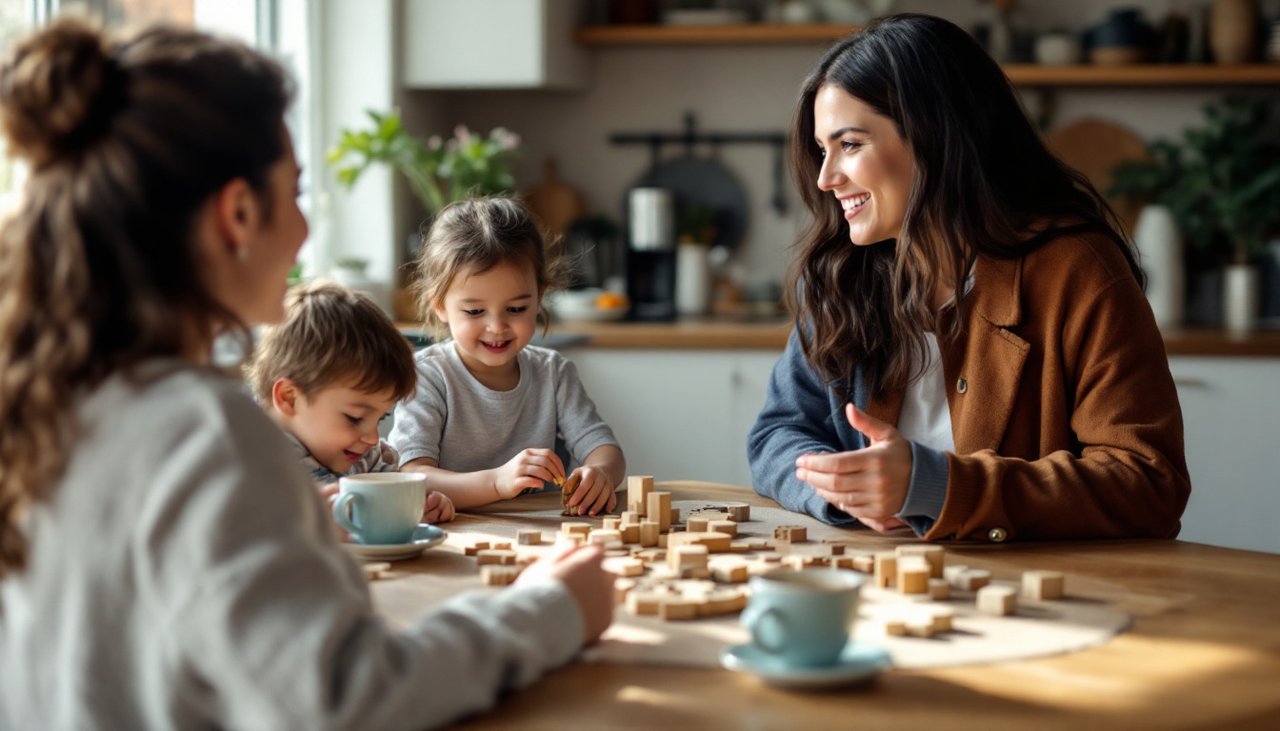
Your child spends the day in a small group, often with children of different ages. Toddlers copy the older ones, older ones learn to be gentle with babies, and there is time for real conversation with one main adult. The educator plans experiences around your child's interests, and many services run regular playgroups and outings so children also mix with a wider group.
Informal care
A grandparent or nanny can give your child wonderful one-to-one attention, and that matters a lot in the early years. The trade-off is that learning is not planned against a curriculum, and depending on the arrangement, your child may spend most days without other children around.
Neither is wrong. It comes down to what your child needs right now.
Licensed vs Informal: Fees, Funding and Flexibility
Who pays and how much
Fees for licensed home-based care are set by each service and educator, so they vary by suburb, age and hours. Informal care costs anything from a thank-you bunch of flowers to a full nanny salary. We are not going to quote figures here, because government help changes and a number in a blog post goes out of date quickly.
Government help
This is where licensed care usually pulls ahead. Children aged three to five can get 20 Hours ECE in licensed home-based care, and informal arrangements do not qualify; the Ministry of Education keeps the current rules on its 20 hours ECE funding page. Depending on your circumstances, you may also be eligible for the Childcare Subsidy through Work and Income or FamilyBoost through Inland Revenue, and both are tied to licensed early childhood services. Eligibility and rates change, so check those pages for the current figures before you plan your budget.
Flexibility
Informal care often wins on flexibility. Grandma can take a sick child, a babysitter can come at 6pm, and the plan can change week to week. Licensed home-based care is more flexible than many parents expect, with part days and set days of the week common, but hours are agreed in advance and illness rules apply to protect the other children.
Pros and Cons of Each Option
Here is the honest summary, both ways.
Licensed home-based care: pros
- Small group of up to four children with one main educator
- A qualified teacher and a licensed service behind every home
- Planned learning based on the national curriculum
- Access to government funding such as 20 Hours ECE
Licensed home-based care: cons
- Hours are agreed in advance, so last-minute changes are harder
- Educators with space may not be on your street, so travel can be a factor
- Sick children usually need to stay home
Informal care: pros
- Often very flexible, including evenings and short notice
- Your child may already know and trust the carer
- Can cost less, or nothing, with family
Informal care: cons
- No outside checks, so safety and quality rest on you
- Usually no access to 20 Hours ECE, Childcare Subsidy or FamilyBoost
- Fewer chances to spend time with other children
- No backup when the carer is sick or away
Which Option Suits Your Family?
You do not have to pick one forever. Lots of Auckland families mix and match, with licensed care on work days and grandparents on Fridays. To decide your main arrangement, work through these questions.

Licensed home-based care is likely the better fit if
- You want someone else checking safety and quality, not just you
- Your child is three or older and you want to use 20 Hours ECE, or you may be eligible for other funding
- You like the idea of a small group and some time with other children
- You need reliable care on set days while you work or study
Informal care is likely the better fit if
- You have a family member you trust who is keen and available
- Your hours change week to week or include evenings
- You only need a few hours here and there, not regular weekly care
A quick way to decide
Write down your top three must haves, such as safety checks, hours, cost or group size. Then score both options against them. If licensed care wins on two or more, it is worth meeting an educator before you decide.
Meeting an educator is the easiest way to see the difference for yourself. Send us an enquiry or call 09 558 7800 and we will match you with licensed educators near you who have space on your days, so you can visit, ask your questions and only then decide.
Frequently Asked Questions
What is licensed home-based care?
Licensed home-based care is early childhood education that happens in a home, under a licence held by a home-based service. An educator cares for up to four children at a time, and a qualified early childhood teacher from the service visits and supports the home.
Is a neighbour minding children the same as home-based care?
Not usually. Unless the neighbour works through a licensed home-based service, it is informal care, which means there is no licence, no teacher oversight and usually no access to government funding.
Can I get 20 Hours ECE with informal care?
No. 20 Hours ECE is only available through licensed early childhood services, which includes licensed home-based care. Informal arrangements with family, friends or a privately hired nanny do not qualify.
Can I use both licensed and informal care?
Yes, and many families do. A common pattern is licensed home-based care on regular work days, with family or a babysitter covering evenings or the odd extra day.